A 23-year-old actor tells her East Village friends she lives in the Financial District, and they respond with genuine confusion. “Why in the world?” they ask, as if she’d chosen to homestead in an abandoned subway tunnel.
That reaction, common as recently as two years ago, is becoming outdated. The Financial District just claimed the top spot on StreetEasy’s 2026 “Neighborhoods to Watch” list with a 46.7% surge in search interest. It’s the area’s first appearance on the ranking, and it signals something larger than a temporary blip in rental patterns.
The transformation unfolding below Chambers Street offers a case study in how urban neighborhoods reinvent themselves when three forces converge: adaptive reuse architecture, lifestyle infrastructure, and pricing that makes financial sense without requiring spreadsheet justification.
The Infrastructure Shift That Changed Everything
Office-to-residential conversions have moved from theory to reality in FiDi at a scale unmatched anywhere else in the country. The 1,000-plus unit project at 25 Water Street now holds the title of largest office conversion in the United States. Historic towers at 160 Water Street and 55 Broad Street each deliver close to 600 rental units, with monthly rates starting around $4,000.
These aren’t cosmetic renovations of outdated commercial space. The conversions have fundamentally altered the neighborhood’s 24-hour population dynamics. Where evening sidewalks once emptied by 7 PM, residential density now sustains the bars, restaurants, and retail that create neighborhood identity.
Printemps opened at One Wall Street last March, bringing a seafood restaurant alongside cocktail and champagne bars. Fish Market and The Dead Rabbit fill with locals on weeknights. The Australian pub Old Mates launched in 2025 to immediate traction. Pier 17 hosts warm-weather rooftop concerts within walking distance of residential towers that didn’t exist five years ago.
This isn’t gentrification in the traditional sense. The Financial District never had an established residential community to displace. Instead, it’s experiencing something closer to genesis: the creation of a live-work neighborhood from what was purely a business district.
The Economics Behind the Migration
A New York Post exclusive reveals the financial calculus driving young professionals downtown. FiDi’s median asking price sits at $1.19 million, running $150,000 below Manhattan’s median. Median asking rent reached $4,690 last year, compared to the borough-wide figure of $4,750.
Those numbers tell half the story. The other half emerges in individual decisions. A 30-year-old advertising professional recently closed on a condo at 88 Greenwich for slightly above $600,000. A 33-year-old Google employee bought in the same building for $800,000. Two actors split a $4,700-per-month one-bedroom at 63 Wall Street, dividing the living room to create a functional two-bedroom.
The pricing advantage matters most to first-time buyers and renters seeking value without sacrificing Manhattan access. One broker put it plainly: she’s “moving everybody into FiDi who wants Tribeca.” That sentiment captures the neighborhood’s current positioning as an arbitrage play on location and lifestyle.
Cross-Atlantic Patterns in Urban Real Estate
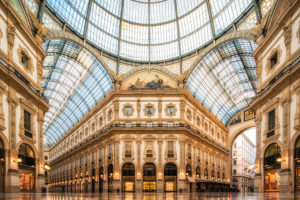
The Financial District’s evolution mirrors patterns visible in European cities where historic commercial centers have successfully transitioned to mixed-use neighborhoods. Milan’s Porta Nuova district, once dominated by offices, now blends luxury residential towers with street-level retail. Florence has seen selective conversions of Renaissance-era commercial buildings into high-end apartments.
The difference lies in execution speed and scale. American capital markets and zoning flexibility allow for rapid, large-scale transformations that would take decades under European regulatory frameworks. The 25 Water Street conversion alone would represent a multi-year undertaking in most Italian cities.
For Italian investors observing U.S. markets, FiDi presents a recognizable playbook: undervalued historic buildings, regulatory support for adaptive reuse, and demographic demand from young professionals seeking urban density. The risk-reward profile differs significantly from established Manhattan neighborhoods where appreciation potential has largely been captured.
American buyers examining Italian markets might draw the inverse lesson. While New York can transform a neighborhood in three years through capital deployment, Italian cities offer stability and appreciation tied to scarcity rather than development velocity. A Financial District condo purchased today carries both upside potential and meaningful downside risk. A Florence apartment in the city center carries neither in equal measure.
What the Trend Lines Suggest
The 46.7% year-over-year increase in FiDi search interest represents more than curiosity. It reflects shifting preferences among renters and buyers who once would have defaulted to the East Village, Williamsburg, or the Lower East Side.
The current inventory of converted office buildings will absorb much of this demand in the near term. The longer question concerns what happens when the easiest conversion projects are complete. FiDi’s residential transformation depends on continuous delivery of new units and lifestyle amenities. A pause in either could stall momentum.
Real estate agents working the neighborhood report that young renters now view FiDi as a legitimate first choice rather than a compromise. That psychological shift matters more than any single building opening. Neighborhoods become destinations when residents stop explaining their decisions and start recommending them.
Whether the Financial District sustains this trajectory or experiences the boom-bust cycle common to rapidly developing areas will become clear within 24 months. Current indicators suggest the former. The infrastructure, pricing, and demographic demand align in ways that don’t typically reverse without external shocks.
For now, actors living on Wall Street no longer require defensive explanations. The neighborhood has earned its moment.
Source: New York Post
Columbus International Real Estate, headquartered at Rockefeller Center in New York with strategic offices in Miami, Milan, and Florence, serves as more than a traditional brokerage. The firm operates as a premier market observatory and vital connection point between luxury developers and elite international clientele. With deep expertise in the Italy-U.S. corridor, Columbus International guides Italian investors through American market dynamics while introducing American buyers to premier Italian real estate opportunities. For inquiries: info@columbusintl.com