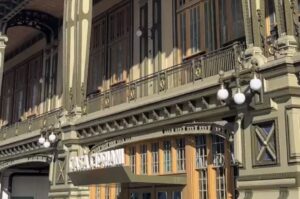
When Massimo Bottura plants a flag in a new market, the real estate conversation shifts. The three-Michelin-starred chef’s latest venture landed in Miami’s Design District inside the Moore Building, a 1921 architectural landmark that’s seen its share of transformations. But what Paladini and his team have created here isn’t just another celebrity chef outpost. It’s a case study in adaptive reuse meeting culinary ambition.
Chef Bernardo Paladini, who’s spent fifteen years in Bottura’s orbit, calls himself “an Italian guest in Miami,” and that perspective shapes everything from ingredient sourcing to the restaurant’s spatial flow. The Moore Building’s twenty-foot ceilings and original skylights provide natural light that most restaurateurs would kill for, and the design team leaned into it. Primary colors punch through the dining room, Gucci florals blanket the banquettes, and pastel plates arrive like props from a Fellini film. This isn’t accidental. It’s calculated charm, the kind that drives Instagram engagement and keeps tables full.
The menu reads like a love letter to Florida’s larder filtered through northern Italian technique. Local stone crab appears alongside saffron risotto cooked in shrimp bisque, a dish that nods to paella without crossing over. It’s smart positioning for a market where Latin American influence runs deep and seafood commands premium prices. The tortellini, hand-rolled by a husband and wife pasta team, comes filled with cured pork and swimming in Parmigiano Reggiano cream. Bottura built his reputation on childhood nostalgia, and Paladini clearly learned the lesson.
The sea bass “porketta” showcases the kind of cross-cultural riffing that makes sense in Miami’s dining landscape. Rolled and roasted porchetta-style, stuffed with pork bacon, the fish arrives with crackling skin and grilled baby lettuce. It’s technically ambitious but approachable, the sweet spot for a restaurant that needs to appeal to both food obsessives and expense account diners.
Valentino Longo, previously at Italian aperitivo bar Vice Versa, designed a cocktail program built around bitter, savory, and citrus profiles with plenty of bubbles. The strategy mirrors what successful bar programs have done across the Design District: create a drinking culture that extends beyond wine, then upsell to bottles as the evening progresses.
The dessert menu pays direct homage to Bottura’s greatest hits. “Oops, I Burned the Key Lime Pie” remixes his famous “Oops! I Dropped the Lemon Tart” with key lime semifreddo, citric crumble, and smoked lime ice cream. It’s branding as much as pastry, a reminder that diners are eating in the extended Bottura universe.
What makes the economics interesting is the accessibility play. Valet runs just five dollars, a rarity in a neighborhood where parking often costs triple that. The savings matter when you’re looking at a $125 Classics Remix tasting menu or the $165 ten-course La Dolce Vita progression. Bottura’s team understands that Miami’s dining scene rewards volume as much as prestige, and keeping the barrier to entry manageable helps fill seats beyond opening week hype.
The zero-waste philosophy shows up in small touches, like the Papà al Pomodoro amuse bouche that repurposes kitchen scraps into something guests actually want to photograph. It’s good marketing wrapped in sustainability language, and it works.
From a real estate perspective, the Moore Building location signals confidence in the Design District’s continued evolution. The neighborhood has spent the last decade transitioning from industrial fringe to luxury retail and dining destination, anchored by deep-pocketed landlords and brands willing to pay premium rents for the right address. Torno Subito fits that narrative, occupying a historic shell with modern infrastructure and the kind of pedigree that justifies higher lease rates.
Whether the concept has staying power beyond the Bottura name remains to be seen. Miami’s restaurant mortality rate runs high, even for celebrity-backed ventures. But the fundamentals look solid: strong location, distinctive design, thoughtful menu adaptation, and operational expertise. In a city where diners chase the new and tourists follow star power, Paladini has built something built to last.