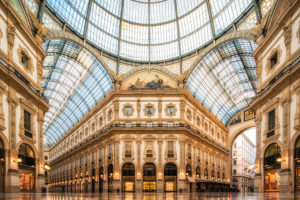
The Americans started arriving quietly. Not the tourists, the buyers. In the past three years, U.S. nationals have become the single largest source of foreign visitors to Florence, close to 900,000 arrivals in 2023 alone, and their presence in the residential market has followed the same trajectory. The financial calculus driving this shift, taken as a whole, represents one of the more compelling value propositions in international luxury real estate right now.
Florence is not a new discovery. That’s precisely the point.
PROPERTIES FOR SALE
Unlike Lisbon five years ago or Tulum before the infrastructure arrived, Florence comes pre-validated. The cultural infrastructure is ancient; the lifestyle has been stress-tested for centuries. What’s changed is the arithmetic. Property prices in Florence have climbed roughly 16% since 2019, with the sharpest appreciation concentrated in the luxury segment. The city’s average price per square meter crossed €4,700 in early 2026, up from around €4,000 four years prior, while prime inventory remains constrained by rules that predate the Italian Republic. You cannot build more Palazzo degli Antinori. The stone is what it is.
The Anatomy of the Market
The historic center anchors the pricing structure. Quality renovations in the Centro Storico now trade between €5,000 and €7,500 per square meter, with trophy properties, those with private terraces, original frescoes, or direct views of the Ponte Vecchio, reaching €8,000 to €12,000 when they surface. They rarely surface.
What experienced buyers track with increasing attention are the neighborhoods that history left partially behind. Campo di Marte and Le Cure, in the northeast quadrant, sit 25-35% below centro prices, averaging €4,300-€4,400 per square meter. These are the districts where a 200-square-meter apartment with original Liberty-era details costs what a 90-square-meter flat costs near the Duomo. For families, or for buyers converting to rental income, the arithmetic is straightforward. Le Cure specifically registered around 7% price growth in 2024, reflecting a buyer shift toward neighborhoods with authenticity and genuine residential scale.
Oltrarno, on the southern bank of the Arno, commands its own premium, averaging €5,500-€6,000 per square meter. The neighborhood’s artisan density, independent restaurants, and lived-in character have become a selling point rather than an afterthought. Its prices reflect that recognition.
Novoli and Firenze Nord, in the northwest quadrant, are where opinions diverge most sharply among serious investors. Average prices here hover near €3,460 per square meter, roughly 40% below the historic center. The Manifattura Tabacchi regeneration project, a former 1930s tobacco factory spanning 110,000 square meters, is reshaping that area’s identity. What was once an industrial lot closed to the city since 2001 now houses the Polimoda fashion school, artists’ ateliers, a boutique hotel, co-working spaces, and a growing residential community with units priced from €387,000 to over €2 million. The project is 70% complete, with a full delivery expected by 2028. Early buyers are already sitting on appreciation. The next wave is still finding its footing.
What American Buyers Actually Want
The buyer profiles are more specific than the market narrative suggests. Three archetypes dominate.
The first is the American of Italian descent, typically 45 to 65, who has reached a point in wealth accumulation where the purchase is both financial and emotional. These buyers research extensively, want authenticity, and are willing to pay for professional guidance through a legal and bureaucratic environment that has no American equivalent.
The second archetype is younger, often in tech or finance, motivated by the post-pandemic recalibration of where and how to live. For this buyer, Florence is part of a portfolio that might also include property in Austin or Miami. Euro-Dollar exchange dynamics over the past two years have made the entry point more forgiving than local per-meter prices suggest.
The third is the institutional-minded private buyer, someone who approaches the purchase as a structured yield play, typically through short-term rental income from a high-spec renovation in a tourist-adjacent zone. Florence’s tourism fundamentals support this model in ways that many comparable European cities cannot. The city welcomed 16.2 million visitors in 2024, generating an estimated 5.2 billion euros in annual spending. That is not a market softening anytime soon.
The Renovation Question
Italian real estate cannot be separated from the renovation question. The most compelling opportunities in Florence are almost always properties that require work. Navigating the Soprintendenza delle Belle Arti, Italy’s heritage authority, is not for the unprepared. Restrictions on structural modifications, material choices, and facade alterations are specific, often counterintuitive, and non-negotiable.
This is where international buyers tend to either lose confidence or overpay for convenience. The gap between a buyer who understands the regulatory environment and one who doesn’t can be measured in months of delay and hundreds of thousands of euros in mismanaged contractor relationships. Competent local representation is not a luxury in this market. It is the market.
The Corridor That’s Reshaping the Conversation
The relationship between Italian and American luxury real estate has moved beyond a niche interest. It now functions as a genuine investment corridor, with capital, buyers, and expertise moving with increasing fluency in both directions. Italian investors are sophisticated participants in New York, Miami, and Los Angeles markets. American buyers are becoming equally present in Florence, Milan, Rome, and the coastal enclaves between them.
Columbus International Real Estate sits at the center of that corridor. Headquartered at Rockefeller Center in New York, with offices in Miami, Milan, and Florence, Columbus International operates as a market observatory as much as a brokerage: tracking deal flow, buyer behavior, and pricing dynamics across both markets in real time. The firm specializes in guiding Italian investors through the nuances of American real estate while helping American buyers identify and execute on the finest opportunities Italy produces. For buyers serious about Florence, or about understanding where the Italy-U.S. opportunity goes next, the conversation starts at info@columbusintl.com.